About 114.5 million Americans are part of a step-relationship. (Smart Stepfamilies)
Blended families by the numbers
Blended families have become common across the world. Millions of people in the United States, Canada, France, and Australia are part of stepfamilies today. These families can build strong new relationships and create happy moments together, but they also deal with unique struggles like figuring out parenting styles and helping children adjust.
42% of American adults have at least one step-relative. (Pew Research Center)
Four in ten new marriages include at least one remarried partner. (Pew Research Center)
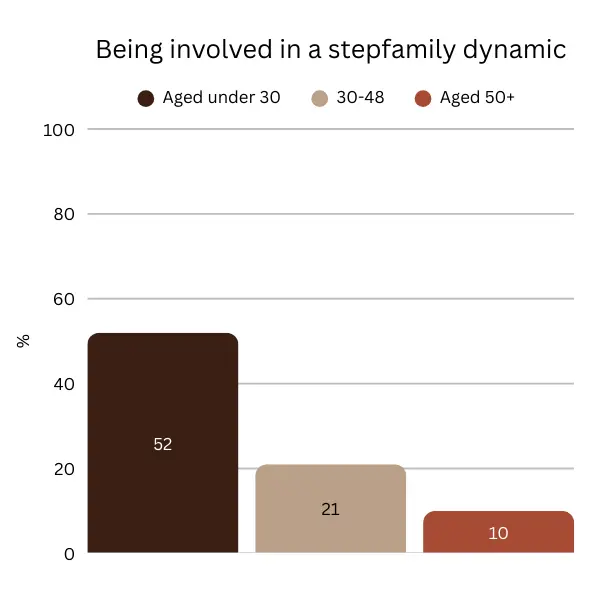
52% of adults under 30 reported being involved in a stepfamily dynamic, compared with 21% of adults aged 30–49 and 10% of those aged 50 and older. (Walden University)
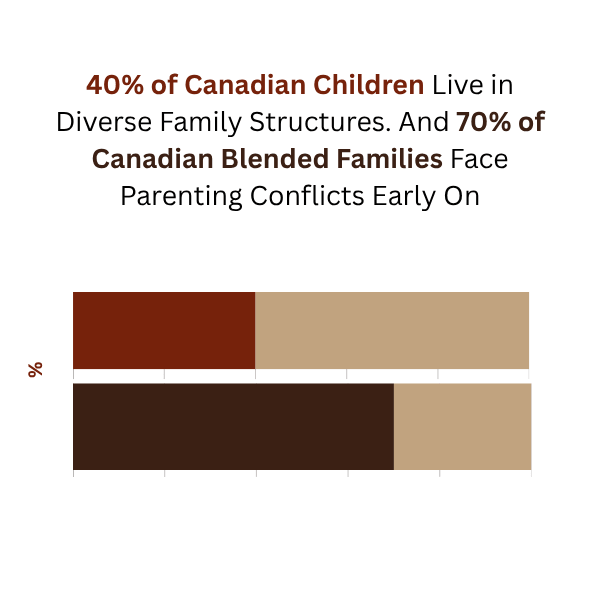
One-parent, stepparent, binuclear, and blended families are becoming increasingly common. Currently, 40% of children under 18 in Canada live in these family structures. (Government of British Columbia)
In Canada, 70% of blended families report experiencing disagreements over parenting approaches within the first two years.(Government of British Columbia)
Adolescents from blended families who experience parental divorce often face challenges in romantic relationships and experience reduced closeness with their parents. As young adults, they tend to encounter higher stress and anxiety in their own romantic relationships. (The University of Texas at Arlington)
Around 75% of divorced women go on to remarry within five years. (WorldMetrics)
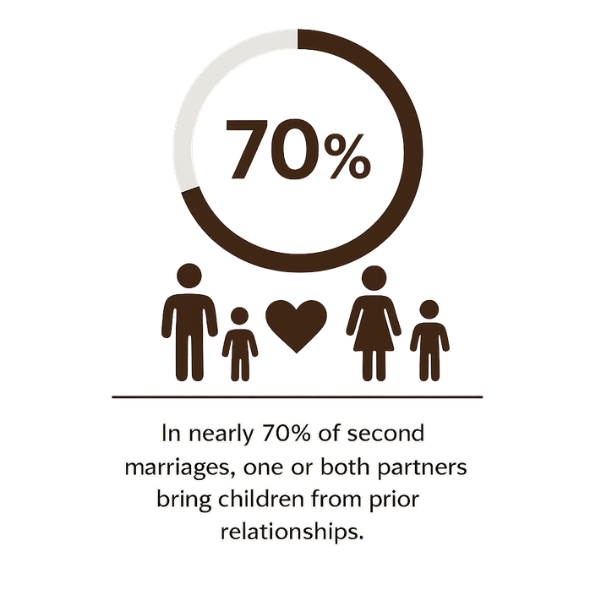
In nearly 70% of second marriages, one or both partners bring children from prior relationships. (ResearchGate)
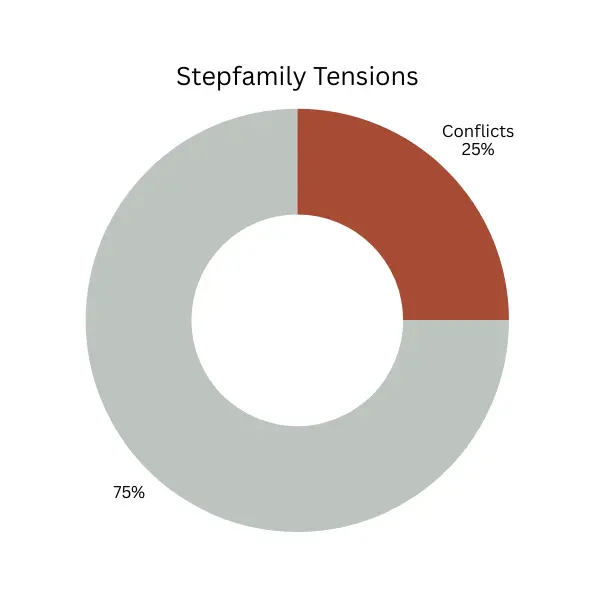
Step-relationships lead to conflict in about 25% of remarried couples. (ResearchGate)
Children in a remarried family often change family interactions and affect how stepchildren relate to their stepparent. (ResearchGate)
Younger children tend to form attachments more easily to a stepfather or stepmother. (ResearchGate)
If a birth father is not actively involved or present, a child may soon lose connection with him. (ResearchGate)
Stepparent-adolescent relationships (ages 12–17) are often more challenging. (ResearchGate)
Stepparents often show one of two approaches: some display emotional distance, minimal involvement, and limited responsibilities—especially those without children or parenting experience—while others exhibit excessive strictness and criticism, particularly if they have their own children or see them only occasionally. These contrasting styles shape the stepparent–stepchild relationship in different ways. (ResearchGate)
With a university degree in psychology and years of parenting expertise, Ana bringsdeep insight to family life, helping parents and children grow happier and stronger together.