
Executive Summary: A comprehensive analysis of federal data, academic research, and international studies exposes a troubling contradiction: single mothers work at rates comparable to other demographics, yet remain among America’s most economically vulnerable populations. The pattern is systemic, not personal—and it affects everything from workplace productivity to public health outcomes.
KEY STATISTICS
- Women carry the weight of single parenthood in America, leading 80% of one-parent families. (Census Bureau)
- More than 7.5 million single mothers across the United States are raising children under 18 in their households, new figures for 2025 reveal. (FRED)
- 82% of single mothers work full-time hours. (CAP)
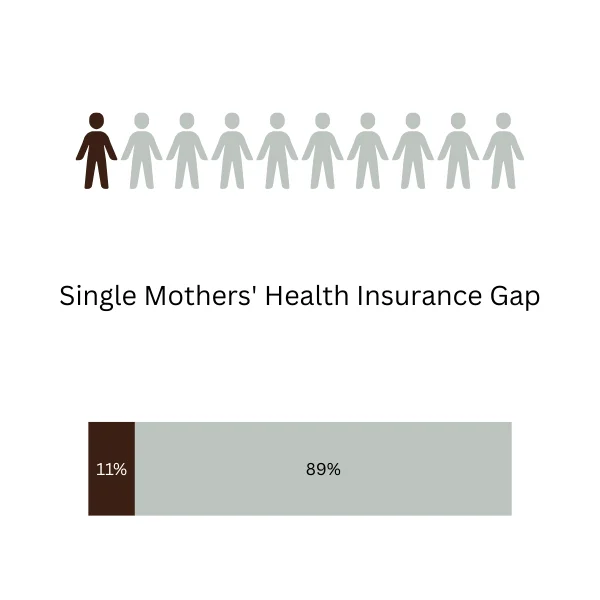
- An estimated 11% of single mothers are navigating parenthood without health coverage. (Single Mother Guide)
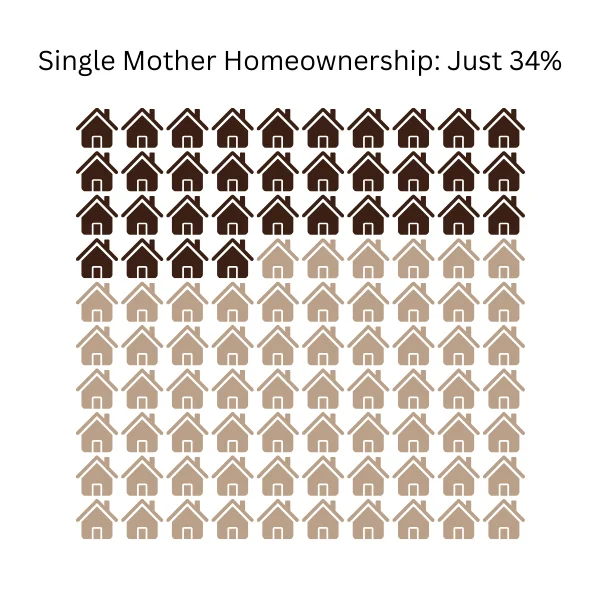
- Homeownership remains out of reach for most single mothers, with just 34% owning their residences. (MorgagePoint)
Demographics and household composition
Single motherhood has become the dominant family structure among one-parent households across America.
- Nearly 16 million American children under 18 resided in single-mother households. (CAP)
- Over 50% of single mothers entered parenthood without marriage. (Census Bureau)
| Marital Status | Percentage |
| Never married | 50.78% |
| Divorced | 27.93% |
| Separated | 12.08% |
| Married, spouse absent | 4.95% |
| Widowed | 4.26% |
3. At the time of childbirth, 45% of single mothers reside in three-generation households. Over time, this percentage increases, with 60% living in multigenerational arrangements at some point during their child’s upbringing. (PMC)
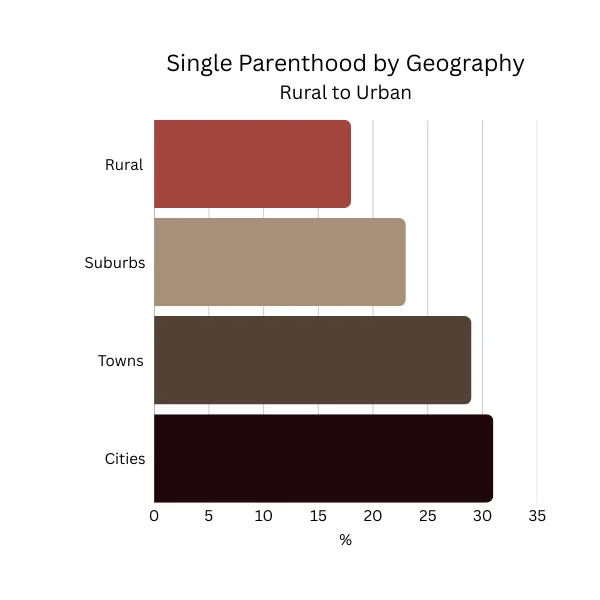
4. Single parenthood follows a geographic gradient, increasing from rural areas (18%) to suburbs (23%), towns (29%), and cities (31%). (nces)
Understanding single mothers’ economic position through key indicators
Among all family configurations, single-mother households face the most severe economic challenges, with income and wealth gaps that are difficult to overstate.
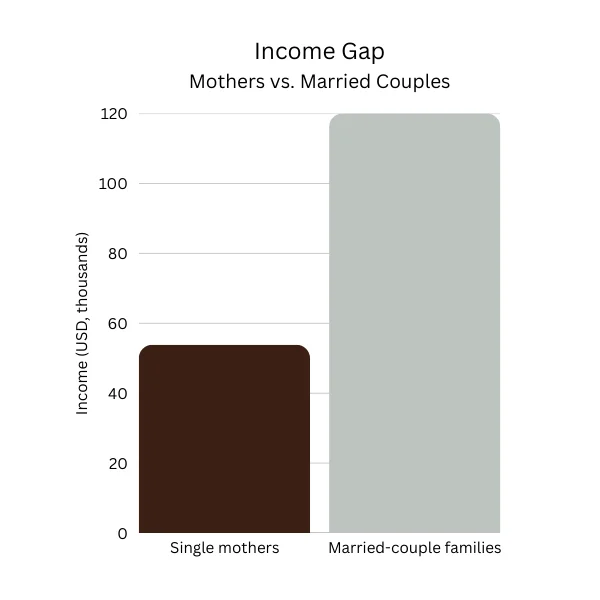
5. Single-mother families earn less than half the income of married-couple families, with median household incomes of $53,867 compared to $120,217 respectively. (US Census Bureau)
6. Hispanic single mothers have the lowest median income among demographic groups at around $34,000. (TheWorldData)
7. Single-mother families experience a poverty rate of 31.3%, approximately 6x higher than the 5.5% rate for married-couple families. (Single Mother Guide)
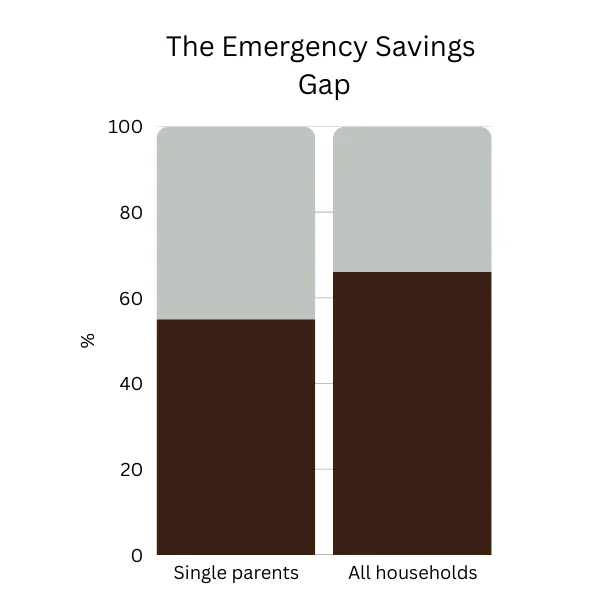
8. Just over half (55%) of single parents maintain emergency savings, compared to nearly two-thirds (66%) of all households. (FDIC)
9. Over two-thirds of single parents with bank accounts primarily use mobile banking to manage their finances. (FDIC)
10. At $13,128 annually, child care alone consumed 35% of a typical single parent’s household budget in 2024. (CCAoA)
How employment shapes the financial reality of single mothers
Contrary to stereotypes, single mothers are highly active in the labor force.
11. Single mothers face an unemployment rate of 4.4%, comparable to the general population rate of 4.3-4.6% in the United States. (CAP)
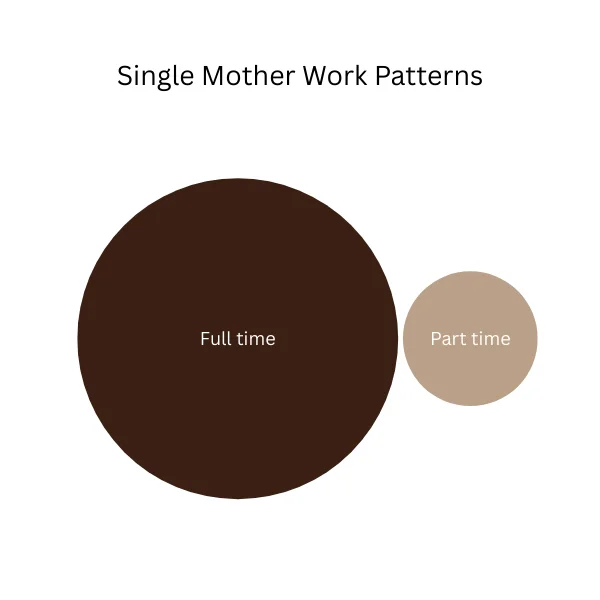
12. The majority of single mothers work full-time (82%) compared to part-time (18%), largely driven by economic necessity. (CAP)
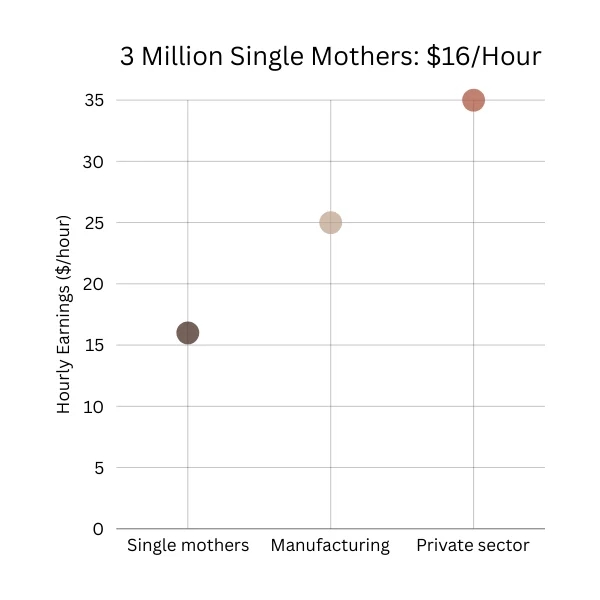
13. Approximately 3 million mothers work in the 40 lowest-paid occupations, earning $16 per hour or less (Iowa Starting Line), significantly below the average wages of $29.49 per hour in manufacturing and $31.76 for private-sector production and nonsupervisory employees (Trading Economics).
14. In 2024, 78% of mothers with youngest children aged 6-17 participated in the labor force, compared to 68.3% of mothers with children under age 6. Labor force participation increases as children reach school age.
15. Getting to work is just the beginning—single parents with young children navigate the most stop-intensive commutes of any demographic group. (FHWA)
Health, stress, and wellbeing among single mothers
When it comes to physical and mental well-being, single mothers consistently rank below other demographic groups.
16. Over 11% of single mothers have no health insurance protection. (Single Mother Guide)
17. Single mothers experience significantly higher rates of depression compared to partnered parents, driven by multiple interconnected challenges. Primary risk factors for depression among single mothers (PMC):
- Money problems and financial stress
- Social isolation and loneliness
- Lack of help and support from others
- Limited parenting resources and capabilities
- Stress from managing everything on a single income
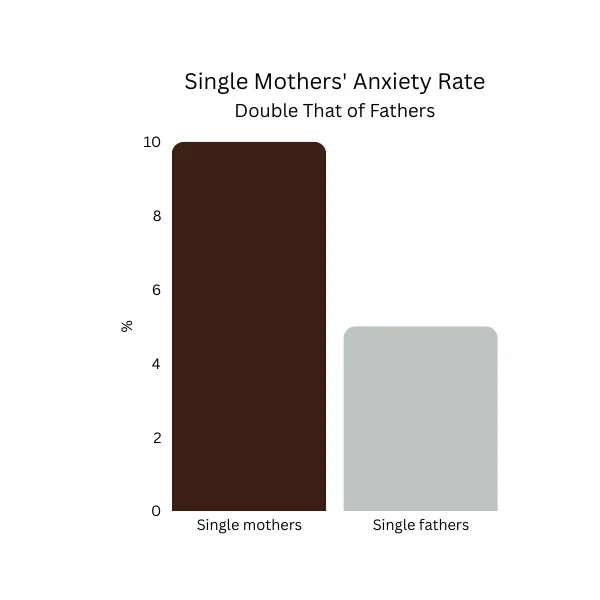
18. Single mothers experience anxiety disorders at more than twice the rate of single fathers (10.7% vs. 4.9%), and nearly double the rate of mood or anxiety disorders combined (19.9% vs. 11.1%). (PMC)
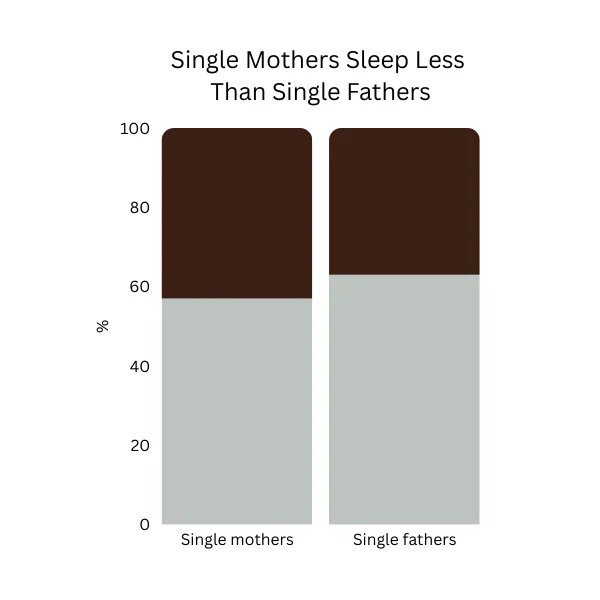
19. Nearly half (43.5%) of single mothers sleep less than 7 hours per night, a significantly higher rate than adults in two-parent families (31.2%) or adults without children (29.7%). (U.S. Department Of Health And Human Services)
20. Single mothers are more likely than single fathers to get insufficient sleep, with 43.5% sleeping less than 7 hours compared to 37.5% of single fathers. (U.S. Department Of Health And Human Services)
Housing stability and social support for single mothers
Housing insecurity remains one of the most pressing challenges.
21. Less than 25% of single-mother families receive child support. (CAP)
22. Among the third of subsidized housing households (33%) that include minors, an overwhelming 91% are single-parent families. (USA Facts)
23. More than 4 million single mothers are raising young children in America, yet their 34% homeownership rate means the vast majority remain renters. (MorgagePoint)
24. Domestic violence is a major reason why single mothers become homeless. (TurningPoint)
25. Nearly 35% of single-mother families face challenges securing sufficient food. (FRAC)
Long-term trends & global context
26. Over fifty years (1960-2010), U.S. single-mother households experienced a fourfold increase. (PMC)
27. Globally:
- Single-parent households in EU countries are predominantly led by women (11%) rather than men (3%). (European Parliament)
- Single-mother households account for 13% of all households globally. (Gallup)
- Nearly one-third (32%) of households in Sub-Saharan Africa are headed by single mothers, the highest rate globally. (Gallup)
- Australian single mothers have the highest poverty concentration globally, with 64% falling into the lowest income bracket. (Gallup)
- Global data from 89 countries and territories indicates at least 101.3 million single mothers living alone with their children worldwide. (UNWomen)
Why these findings matter
The pattern is clear and troubling: despite high workforce participation, single mothers face compounding disadvantages that paychecks can’t overcome. The implications extend far beyond individual households—affecting labor productivity, public health systems, child development outcomes, and whether the next generation can climb the economic ladder. Without intervention, the gap widens.
Follow the numbers where they lead. Additional analysis available: Blended Family Statistics: Key Data