
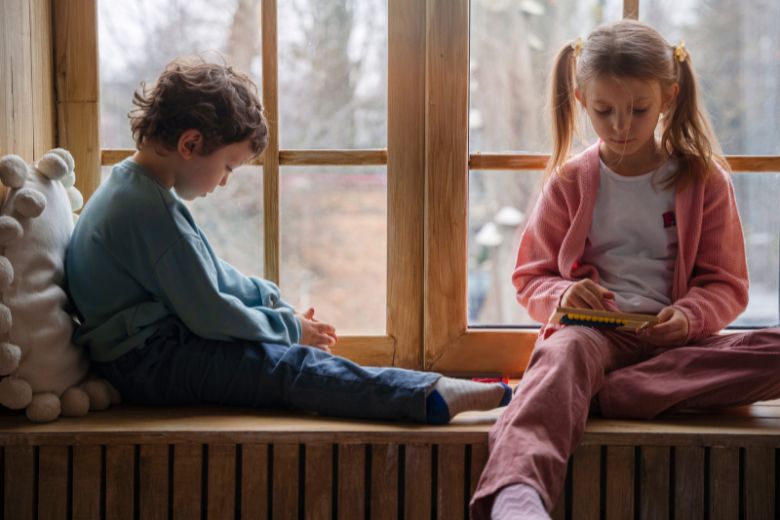
It’s common to see young kids struggling with turn-taking—grabbing toys, jumping into conversations, or becoming upset when they can’t get what they want immediately. For parents, these moments can feel stressful and emotionally draining.
Patience doesn’t come naturally in early childhood. It’s something that needs to be taught over time. With consistent support, modeling, and practice, children can learn it gradually. In this article, you’ll explore 11 practical strategies, complete with examples, along with printable resources by Esme Keeffe designed to help children and siblings practice turn-taking.
Practical strategies for parents & educators teaching turn-taking
Teaching your child patience won’t happen overnight. And that’s okay! Below parents will find some tried-and-true ways to help their little ones learn to wait.
| Strategy | Description | Examples |
| Strategy #1: Model patience | Children learn by observing parents and caregivers. Showing calmness while waiting teaches them how to respond in similar situations. | Stay calm in traffic, wait your turn in conversation, or let someone go ahead in line. |
| Strategy #2: Visual aids | Tools that make waiting visible and understandable, helping kids measure time and see progress. | Use a sand timer, waiting chart with names, or sing a short “waiting song.” |
| Strategy #3: Role-play | Practicing pretend situations gives children a safe space to improve waiting skills. | Play “waiting at the doctor’s office,” “lining up for the bus,” or “waiting for a turn on the slide.” |
| Strategy #4: Start small | Short waiting periods build success and reduce frustration before extending the time. | Begin with 10 seconds of waiting for a toy, then increase to 30 seconds or 1 minute. Introduce small waiting moments into the routine, such as asking your child to pause and count to ten before handing over snacks or taking a few deep breaths together before starting a new activity. |
| Strategy #5: Classic turn-taking games | Using playful and engaging activities to make patience practice fun and memorable. | Play board games e.g. Snakes & Ladders, Candy Land, card games, puzzles, memory cards. |
| Strategy #6: Take-turn physical activities | Games and activities where children physically practice waiting and taking turns. | Passing a ball, freeze dance game, baking/ preparing meals together, planting, relay races |
| Strategy #7: Establishing daily patience rituals | Small routines built into the day help normalize waiting and make it a predictable habit. | Waiting for a song to end before snack time, taking turns choosing bedtime stories, or saying “count to 10 before opening the door.” |
| Strategy #8: Conversation games | Simple speaking activities where children practice listening, waiting for their turn to talk, and responding in a back-and-forth exchange. | Telephone games, story chain. |
| Strategy #9: Specially designed coloring books and similar printable downloads | Printable coloring pages and activity sheets created for focused, calming and take-turn practice that | Turn-by-turn coloring pages |
Use and combine these ideas everywhere: at home, at school, and when you’re out playing. When kids hear the same message from everyone, they learn faster.

Ages 2–3: Learning “stop”
Focus on physical “stop” games with very short waits e.g.
Target wait time: 5–10 seconds
- Freeze games: Clap once, and everyone freezes like a statue.
- “Ready, set, go!”: Count down together before releasing a balloon or starting a race.
- Take turns stacking: A parent/caregiver stacks a block, a toddler stacks a block.
- Roll the ball: Sit on the floor and roll a ball back and forth. Each child waits for it to arrive before rolling back.
- Red Light, Green Light
Key strategy: Celebrate every successful wait, even a 5-second one. Use the words “first me, then you” — little kids understand this better than “be patient.”
Ages 4–5: Building the pause
Preschoolers can wait 30–60 seconds with practice. They understand rules but struggle to follow them when excited.
Target wait time: 30–60 seconds
- Simple board games: e.g. memory cards, Candy Land
- Simon Says, musical chairs
- Turn-by-turn storytelling e.g. using wordless story books
- Turn-by-turn coloring pages e.g. My Turn Your Turn designed by Esme Keffe
- Every day life moments, e.g. while shopping, waiting for a birthday party, etc.
- Interactive story time: Have kids sit in a circle and pass a book around. Each child gets to turn one page or tell one part of the story
- Team activities e.g. adding blocks to a tower

Ages 6–7: Understanding others
Early elementary children can wait 1–2 minutes and are starting to understand why waiting matters for everyone, not just themselves.
Target wait time: 1–2 minutes
- Strategy board games that require planning ahead and waiting while the other person takes their move.
- Story chain, storytelling, also with wordless books
- Simon Says, musical chairs
- Cooking, planting, etc.
- Shadow puppet show, team games and activities, waiting for siblings, etc.
- Turn by turn coloring pages, etc.
Key strategy: Explain the “why” behind waiting: “When you wait, your friend gets to finish their idea — just like you want them to wait for yours.” At this age, empathy starts to click.
Everyday moments that naturally teach kids how to wait
Here’s the exciting part—you don’t need special toys or activities to teach waiting. Your regular day is full of perfect practice moments! The trick is turning these everyday situations into learning opportunities.
Strategy #10: At the grocery store, those long checkout lines become waiting practice time. Give your child a job: “Can you count how many people are ahead of us?” or “Let’s see if you can spot all the red things while we wait.” Suddenly, waiting becomes a fun challenge instead of torture.
Strategy #11: Playground time is waiting boot camp! “Look, there are three kids ahead of you for the slide. Let’s count them together as they go down.” When it’s finally their turn, celebrate: “You waited so patiently! That must feel great!”
Strategy #12: Family dinner offers built-in turn-taking practice. Try “Everyone gets to share one thing about their day, and we’ll go around the table.” Or take turns being the “server” who passes out plates or fills water cups. Kids love having important jobs.
Strategy #13: Make-believe is your secret weapon. Set up a pretend doctor’s office with stuffed animals as patients, or create a restaurant where toys have to wait to be served. When kids play out waiting scenarios, they’re practicing for real life without any pressure.
Strategy #14: Even car rides work. “We’re stopping at a red light—let’s see how long it takes!” or “Dad’s getting gas, so we need to wait in the car. What can we do while we wait?”
The more your child practices waiting in different places, the easier it becomes everywhere.

Creating an environment where kids want to practice waiting
Kids learn best when they feel good about what they’re doing. Here’s how to create a place where your child actually wants to practice waiting:
- Celebrate the small wins. When your child waits even for just a few seconds, make a big deal about it! “Wow, you waited so patiently for your turn on the swing!” You can even give high-fives, stickers, or extra bedtime stories when they do well.
- Make the rules crystal clear. Kids need to know what you expect from them. Try simple rules like “We take turns with toys” or “We wait for everyone to sit down before we eat.” Write them down or draw pictures so kids can remember them better.
- Keep things calm and simple. Turn off the TV during dinner, put away extra toys during playtime, or find a quiet spot at the playground. When kids aren’t overwhelmed, they can focus on learning to wait.
- Stick to the same rules every day. If the rules change all the time, kids get confused and frustrated. When everyone in your family follows the same waiting rules, kids feel secure and learn faster.
Practical ways to teach little ones how to wait their turn
Toddlers and preschoolers need special help because their brains are still learning. Here’s what works best for the youngest kids:
| What to Do | Instead of Saying This | Try This Instead | Why It Works |
| Use simple words | “Be patient, honey” | “You can go after me” | Little kids don’t know what “patient” means, but they understand “after me” |
| Show them how | Just talking about taking turns | Use dolls to show turns, or demonstrate with toys | Kids learn better when they can see what you mean |
| Make it fun | Making them wait quietly | Count together, sing a short song, or use a “waiting jar” with colorful beads | When waiting is fun, kids want to do it |
| Keep it short | Making them wait 1-10 minutes | Start with 10-30 seconds, then work up slowly | Little kids can’t wait very long. Start small and build up |
| Help when needed | Expecting them to remember everything | Some kids need extra help—break it down into tiny steps | Every child is different, and that’s okay |
Remember: If your child is having a really hard time, it might mean they’re not quite ready yet. Go slower, make the wait times shorter, or try again in a few weeks. Mistakes are part of the process.

How to respond to common waiting challenges in kids: What to do and what to say
Even when you’re doing everything right, kids will still have tough moments with waiting. That’s completely normal! Here’s how to handle the most common challenges:
| Challenge | What It Looks Like | What to Do | What to Say |
| Meltdowns and tantrums | Crying, screaming, throwing themselves on the ground | Stay calm, get down to their level, acknowledge their feelings | “I can see you’re really upset about waiting. It’s hard to wait when you want something so much.” |
| Fighting with other kids | Pushing, grabbing, “It’s my turn!” arguments | Teach them words to use instead of actions | “Try saying ‘Can I go next?’ |
| Testing the rules | Whining, bargaining, trying to skip the line | Stay consistent but kind—don’t give in even when it’s hard | “I know you don’t want to wait, but the rule stays the same. You can wait here with me or choose a different activity.” |
| Giving up completely | “I don’t want to play anymore,” walking away sad | Help them try again with smaller steps | “That felt too hard, didn’t it? Let’s try waiting for just 10 seconds this time.” |
You need patience to teach patience! Some days will be harder than others, and that’s okay. Every time your child practices waiting—even if it doesn’t go perfectly—they’re learning something important.
Common mistakes parents make when teaching kids to wait (and how to fix fhem)
We’ve all been there—trying our best but accidentally making waiting even tougher for our kids. Here are the biggest mistakes parents make (and how to avoid them):
- Mistake #1: Expecting too much too soon. Your 3-year-old isn’t going to wait patiently for 15 minutes at the doctor’s office. That’s not being difficult—that’s being 3! Start with really short waits (like 30 seconds) and slowly work up. Think baby steps, not giant leaps.
- Mistake #2: Turning waiting into punishment. When we’re frustrated, it’s easy to say things like “If you don’t wait nicely, you’ll go to timeout!” But this makes kids think waiting is bad or scary. Instead, try “Waiting is something we all have to learn. I’m here to help you practice.”
- Mistake #3: Making them wait way too long for their age. A toddler’s brain literally cannot handle waiting as long as a 7-year-old’s can. If your child is melting down every single time they have to wait, the wait might be too long. Check if you’re asking too much for their age and development.
- Mistake #5: Getting into power struggles. Sometimes we dig in our heels and make everything about winning. “You WILL wait and you WILL like it!” doesn’t teach patience—it just creates battles. Remember, you’re the teacher, not the opponent.
- Misak # 6: Giving up too quickly. On the flip side, if you cave in every time things get tough, kids learn that they just need to fuss louder or longer. Hang in there! Learning takes time.
When waiting struggles may need extra support: Signs it’s time to seek help
Most children learn to wait with time and practice, but sometimes parents wonder if their child needs more help. Here are some signs that talking to a professional might be a good idea:
Sign #1: If your child is still having major waiting struggles after age 6 or 7. By school age, most kids can wait for reasonable amounts of time—like sitting through a story or waiting their turn in line. If your older child is still having daily meltdowns about waiting, it might be worth checking in with their pediatrician or a child development specialist.
Sign #2: If waiting problems are affecting friendships and social life. Are other kids starting to avoid your child because they can’t take turns? Is your child being left out of activities because they struggle with waiting? When social relationships suffer, it’s often helpful to get some professional guidance.
Sign #3: If tantrums are extreme or happen constantly. We’re talking about meltdowns that last for hours, happen multiple times every day, or involve behavior that seems dangerous (like hitting, biting, or destroying things). These intense reactions might need extra support to figure out what’s going on.
Sign #4: If you’ve tried everything and nothing seems to help. Sometimes parents work really hard using all the right strategies, but their child still struggles more than expected. This doesn’t mean you’re doing anything wrong—some kids just need different approaches or additional support.
Sign #5: Trust your parental instincts. If something feels off or you’re worried about your child’s development, it’s always okay to ask questions. Child development specialists, pediatricians, or school counselors can help figure out if there are other things going on—like ADHD, anxiety, or sensory issues—that make waiting extra challenging.
Asking for help is a sign of being a thoughtful, caring parent, not a sign of failure.
Conclusion
Yes, there will be meltdowns. Yes, there will be days when you wonder if anything you’re doing is working. But those small moments—when your 4-year-old lets their little brother go first on the slide, or when your preschooler waits patiently while you finish a phone call—those are the moments when you know it’s all worth it.
FAQ
What activities can I do at home to teach waiting skills?
Parents have a great choice of activities to help their little ones practice turn-taking, ranging from simple everyday free activities to board games, building blocks, and more. Check out our list in the article for ideas that you and your child will enjoy.
How can teachers encourage turn-taking in the classroom?
Use waiting charts, dedicated coloring pages, physical (team activities) storytelling, etc. Assign clear roles, and praise children who wait their turn: “I saw how nicely you waited for your turn to share!”
How long should a 4-year-old be able to wait for their turn?
Typically 30 seconds to a few minutes, depending on their development. Start with very short waits—even 15-30 seconds is great for beginners. As they get better at waiting their turn, you can slowly increase to 2-3 minutes for something they really want.
Is it easier to teach waiting skills to toddlers or preschoolers?
Preschoolers usually have more self-control, but toddlers benefit from early practice. Toddlers (ages 1-3) need lots of help and very short waits, but they’re like little sponges soaking up everything you teach them. Preschoolers (ages 3-5) can understand explanations better and wait longer, making the actual teaching easier.
Should parents or teachers take the lead in teaching turn-taking?
Both. Children learn best when skills are reinforced at home and school. When parents and teachers use similar approaches and language, kids pick up waiting skills much faster. It helps to communicate with your child’s teacher about what’s working at home, and ask what strategies they use in the classroom. The more consistent the message, the quicker children learn that waiting is just part of life everywhere they go.
Is modeling patience more effective than using rewards?
Yes, but combining both can motivate children. Kids learn by watching what parents do more than listening to what they say. When they see you waiting calmly in line or taking turns in conversation, they copy that behavior. Small rewards like praise (“You waited so nicely!”) or stickers can boost their motivation, but your patient example is what really teaches them how waiting should look and feel.
What should I do if I lose my patience while teaching my child to wait?
Take a deep breath, apologize if needed, and start over. It’s completely normal to feel frustrated. Step away for a moment if you can, take some deep breaths, and remind yourself that your child is still learning. A simple “I got frustrated too, and that’s okay. Let’s try again” shows your child that everyone struggles with patience sometimes, and that’s part of being human.
How can I encourage turn-taking and patience between siblings with different temperaments?
Adjust your approach for each child while keeping the same basic rules. Some kids need extra time warnings (“Five more minutes, then it’s your sister’s turn”), while others do better with visual timers they can see. The impatient child might need shorter turns at first, while the naturally patient one can handle longer waits. Praise each child for their specific efforts—”You waited even though it was hard” or “You shared so kindly with your brother”. You can also use our “Your Turn, My Turn” downloadable coloring page to make turn-taking practice fun and hands-on — kids take turns coloring in sections, learning to wait and share while staying happily engaged.
If turn-taking keeps tipping over into full-blown fighting, our guide to handling sibling rivalry at every age breaks down what helps most from toddlerhood onward, including when two children simply have clashing temperaments.
What should I do if my child regresses or resists these strategies after initial progress?
Stay consistent; setbacks are totally normal. Children might take steps backward before moving forward again—it’s part of how they learn. Check if something has changed in their life (a new baby, starting school, stress at home) that might be affecting their patience. Go back to shorter waits and simpler expectations temporarily, then build back up slowly. Don’t give up—regression usually means they’re getting ready for their next big leap forward.
References and recommended reading
- Emotional Life of the Toddler by Alicia F. Lieberman
- The Whole-Brain Child by Daniel J. Siegel & Tina Payne Bryson
- Thirty Million Words: Building a Child’s Brain by Suskind, Dana
Updated: 27.05.2026