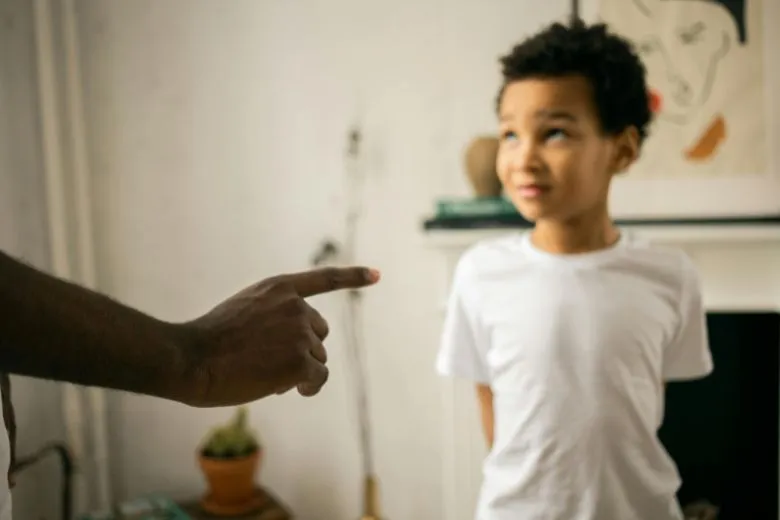
If you’ve ever typed “why is my child lying?” or “is lying normal at age 5?” into Google, you’re not alone. Nearly every parent eventually faces the sting of a dishonest moment—whether it’s a preschooler denying the missing cookie or a tween insisting they “totally did their homework.”
Lying feels personal, but psychologists Paul Ekman and Victoria Talwar both argue: lying is a normal, developmental part of childhood, and understanding it is key to raising honest, emotionally secure kids.
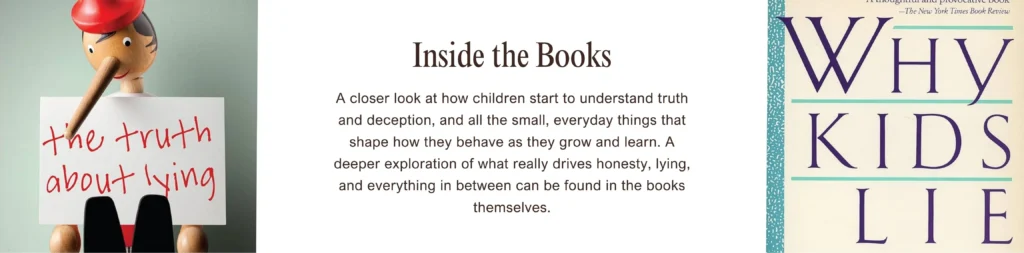
This article reviews two essential books—Why Kids Lie by Paul Ekman and The Truth About Lying by Victoria Talwar—breaking down their insights and offering practical steps parents can use today.
| Feature | Why Kids Lie (Ekman) | The Truth About Lying (Talwar) |
| Focus | Emotional roots of lying | Practical strategies & developmental science |
| Tone | Story-driven, reflective | Clear, instructional, research-based |
| Ages | 3–12 | 4–14 |
| Best For | Understanding why kids lie | Learning how to teach honesty |
If you want practical tools now → Start with Talwar
If you want deep insight into the psychology of lying → Start with Ekman
Why Kids Lie by Paul Ekman
Lying can be one of the most frustrating parts of parenting, but Why Kids Lie: How Parents Can Encourage Truthfulness invites readers to look at it from a different angle. Through years of research and experience, the author explores what children’s lies can reveal about their emotions, relationships, and development. Warm, practical, and backed by science, the book shows how parents can encourage honesty without damaging trust. It has remained a respected resource since its original publication in 1989.
Paul Ekman — one of the world’s leading experts on emotion and deception—examines lying as a social, emotional, and developmental skill that evolves with age.
Ekman’s central premise: Lying is a developmental behavior rooted in emotion, fear, and social learning—not moral failure.
Key insights for parents from Why Kids Lie (Paul Ekman)
1. Even very young children lie—and that’s developmentally normal
Children begin experimenting with concealment, fibs, and misdirection earlier than parents expect. Ekman highlights how both saying something false and hiding the truth are forms of lying, even if kids see them differently.
On concealment vs. falsifying:
❝Some people would say that Jack lied and Tom didn’t, but I think there isn’t much difference between saying something false and concealing the truth. Both are lies. The purpose is the same—to deliberately mislead.❞
❝Concealing is no more justifiable, no more moral or proper than falsifying. They are just different techniques for lying. Which technique a liar chooses depends upon what the circumstances require. Everyone, child or adult, prefers to conceal the truth rather than say something false. It’s easier. The concealer doesn’t have to remember or defend a false line. And concealing doesn’t seem as bad.❞
On when children can lie:
❝By four years of age, and perhaps earlier, some children can and will lie. They are not simply making mistakes, or confusing fantasy with reality, but deliberately attempting to mislead.❞
❝Three different studies show that at least some children as young as three or four will deliberately lie. Of course, the negative consequences for lying were not high in either of the experiments… Until this work, most scientists believed that three- to six-year-olds were not considered able to distinguish between unintentionally making a mistake and deliberately saying something true.❞
On children’s different perspective on concealment:
❝Tom doesn’t agree with me. He does not think he lied about the party. To him lying means saying something false, while concealment is not a lie.❞
2. Emotional regulation shapes lying
Children lie when they’re afraid of punishment, overwhelmed, or trying to avoid disappointing a parent. Their developing self-control and social awareness influence how and when they lie.
Primary motive – avoiding punishment:
❝Both Tom and Jack lied to avoid punishment. Children of every age I have studied say that avoiding punishment is the main reason why they and other kids lie. Parents and teachers also report that avoiding punishment is the most frequent reason why children lie. This is one of the most consistent findings in scientific studies of lying.❞
One thing that came up again and again in my developmental psychology lectures was that children often lie to avoid punishment. It was such a consistent finding that it was treated as one of the clearest explanations for why young children start lying in the first place.
❝Young children of five and six, she [Vasek] concluded, will lie to ‘… avoid punishment whenever they suspect that they have done something for which they should be punished. … [It is] a choice for the child between telling the truth and taking one’s chances [of being punished] or telling another lie to avoid punishment for the first.’❞
Developmental factors:
❝Many of the abilities that develop with age—abilities necessary for children to take increasing responsibility for themselves—also allow them to be more successful if they choose to lie.❞
❝These abilities—memory, planning, taking the role of the other person, fast thinking and talking, and control of emotions—are all necessary for the child to grow into adulthood. Ironically, the abilities that make parents proud and pleased at their child’s development are also the same abilities that will later enable the child to disappoint and deceive his or her parents.❞
It may sound surprising, but the same developmental skills behind lying also help children become creative thinkers and better problem-solvers. Activities that encourage imagination and exploration can help those abilities grow.
Fear and emotional factors:
❝Like guilt, fear of being caught makes lying harder, may motivate a confession, and can produce signs in face, body, and voice that betray the lie. That fear can become a torment, and people may confess in order to obtain relief from it.❞

3. The parent’s reaction determines whether lying increases or decreases
Harsh punishment, interrogation, and anger reinforce secrecy. Ekman’s stories show that empathy and calm questioning encourage truthfulness, while intimidation backfires.
❝It is still hard for Tom to understand that having a secret party and not telling us afterwards was a lie. But the important thing he told is how my irritable mood made it hard for him to confess what he had done. I don’t think he thought up the excuse afterwards. Dr. Thomas Lickona has written that ‘fear of a parent’s anger is no doubt the single biggest cause of kids’ lies. So, if you want your child to be truthful with you, try to minimize fear of your anger as an obstacle.❞
On power struggles:
❝There is general agreement among experts who deal with children that engaging in a power struggle to obtain a confession is usually the worst tactic.❞
❝A parent who screams: ‘You’re a liar. I’m going to call Sue’s parents right this minute and find out if her car really broke down. You can’t tell me that same lie again!’ surely succeeds in venting his own frustration. He certainly succeeds in provoking hostility and defensiveness on the part of his daughter. He may even succeed in proving his daughter a liar if he makes that telephone call. But does he succeed in teaching her a moral lesson?❞
On harsh punishment:
❝Most experts now believe that power-assertive discipline, which includes physical punishment and threats, is associated with a lower level of moral development. It creates a fear of punishment, rather than an internalized belief in moral behavior. With lying, there is a consensus that a child who is subject to harsh physical punishment lies more often in order to avoid punishment.❞
❝Rather than focusing on trapping his child in a lie, the parent has a better chance of developing a trusting relationship if he focuses on the reason for the lie, the importance of the curfew. He might say, ‘I really don’t want to hear any more excuses about why you are not home by your curfew. The point is, I need to know when you are coming home. I worry about your safety and I need to know where you are.’❞
What makes Why Kids Lie worth reading
Decades after its publication, Ekman’s book remains remarkably insightful. Rather than focusing only on the behaviour itself, it digs into the emotions, motivations, and developmental processes behind why children lie. Here are some of its greatest strengths:
- Deeply research-based, drawing on Ekman’s pioneering deception science
- Uses real family scenarios, making complex psychology relatable
- Offers clear strategies for reducing lying while preserving trust
- Particularly strong on the emotional roots of dishonesty
Who should read Why Kids Lie
This book is a particularly good fit for parents who want to better understand the reasons behind children’s behaviour, especially:
- Parents of children ages 3–12
- Families dealing with frequent lying, emotional outbursts, or secrecy
- Anyone who wants to understand why lying happens, not just how to stop it
The Truth About Lying by Victoria Talwar
The Truth About Lying: Teaching Honesty to Children at Every Age and Stage is a modern, evidence-based guide to understanding children’s honesty and deception. Published in 2022, the book shares insights from Talwar’s landmark research, including decades of lab studies with children, and turns them into clear, practical advice for parents.
The Truth About Lying covers everything from preschool fibs to teenage secrets, with real scripts and conversation frameworks throughout.
Victoria Talwar is one of the world’s leading researchers on children’s honesty and deception. Her book provides a highly accessible guide rooted in developmental psychology, explaining how lying emerges, how children learn honesty, and what parents can do to teach truthfulness.
Talwar’s core message: Honesty is a skill. Like any skill, it must be taught—not assumed.
Key takeaways for parents from The Truth About Lying (Victoria Talwar)
1. Lying develops step-by-step throughout childhood
Using decades of experiments (including the famous “temptation resistance paradigm”), Talwar shows that lying is a normal cognitive milestone, not a sign of moral failure.
On lying as developmental milestone:
❝Lying is an undesirable behavior, and we do not wish children to tell lies. However, it is not the case that because a child tells a lie, they are going to grow up to be a ‘bad person.’ Lying is common among adults, and, as I outline in this chapter, it also is a normal part of child development. Although undesirable, the ability to lie emerges and develops because of children’s developing abilities to understand and interact with the world around them.❞
On the temptation resistance paradigm:
❝One common method used to examine children’s spontaneous lie-telling is the temptation resistance paradigm. In this paradigm, children have the opportunity to commit a transgression and are later asked about their behavior. For example, preschool children are commonly invited to play a game in which they are instructed not to peek at a forbidden toy when an experimenter momentarily leaves the room (…). Using this paradigm, researchers have examined children’s ability to tell lies to conceal their transgression and to avoid punishment.❞
On lying emerging from cognitive development:
❝In some ways, we can think of lying as a by-product of children’s positive cognitive development. As they develop cognitive abilities to understand others and to control their own behaviors, these abilities give them the skills to deceive. Realizing this can help parents understand that the lies young children tell are part of this normal (and generally positive) development.❞
On clear evidence from experiments:
❝There is clear evidence that children’s lie-telling emerges in the preschool years and rapidly increases with age.❞

2. Empathy and morality shape honesty
Children tell fewer lies when they feel emotionally safe, connected, and understood. Shame-based approaches actually increase deception.
On harsh punishment increasing lying:
❝Using strict authoritarian discipline had the opposite effect than was intended: It increased the lying and made children better liars. In such environments in which there is strict control and harsh punishment, children learn that lying can be an effective strategy to avoid punishment. Given the high stakes of such lies if found out, they quickly learn to become effective liars to conceal their deception and misdeeds.❞
On avoiding shame:
❝Shame is different from guilt. While guilt is the feeling that ‘I did a bad thing,’ shame is the feeling that ‘I am a bad person.’ When we feel guilt, we feel remorse and regret (…). In contrast, when we feel shame, we feel worthless, and we are motivated to either shut down or lash out at those shaming us; we are not motivated to improve our behavior.❞
On shame leading to more concealment:
❝Shaming leads the child to feel bad about themselves and does not foster their honest behavior. If children are belittled regularly or made to feel deep shame about themselves, they may lie more to avoid such negative feelings.❞
On emotional safety and disclosure:
❝Children who feel that their parent is prying too much may be more likely to start keeping things about their life hidden. They may become more likely to shut down communication and to avoid giving you details about their lives.❞
On warm relationships promoting honesty:
❝When parent and child have a strong, emotionally warm relationship, rules can help reduce arguments and daily discussions about how to behave. The child or teen feels that they are respected and appreciated, and that they will not be harshly and unjustly punished (…). Within a warm and loving relationship, children are more likely to internalize moral standards of behavior and accept parental authority.❞
3. You can talk about honesty without scaring or shaming kids
Talwar gives parents scripts and frameworks for teaching honesty proactively—before conflict happens—emphasizing open communication, modeling, and positive discipline.
On teaching before conflict:
❝Conversations about honesty should be held at times when the child is not personally involved in lying. Discussions about lying and honesty when the child has just lied may lead to defensiveness and fear of negative consequences, which prevent the child from truly thinking about the concepts, the reasons for it, and the behaviors attached to such principles.❞
On example conversation framework:
❝Here are the basic steps for having a conversation about honesty:
- Explain what honesty is. For young children, a simple definition is fine. For older children and teenagers, you can have more elaborate discussions about what it means to be truthful to yourself and to others, and why.
- Explain why honesty is important …
- Explain how to practice honesty …
- Give examples …
- Role-play.❞
On modeling:
❝The goal of discipline is to teach the child right from wrong. For my purposes, I am referring to discipline that involves training the child to correct and mold their behavior. The emphasis is less on controlling the child and more focused on providing the scaffolding and structure to develop, over time, the child’s internal self-control, behavior, and understanding to make positive choices.❞
On open communication:
❝Open communication is a vital part of encouraging honesty in children and is important at all stages. For instance, teenagers who feel they can talk with their parents about what is happening in their lives or what is bothering them are more likely to tell their parents details about their lives. One of the main reasons children conceal and tell lies is because they feel like they cannot trust their parents to listen to them without being negative.❞
On acknowledging honesty:
❝An important and powerful way of fostering honesty is to acknowledge it when you see it. We recognize lying, and it has consequences. Do we remember to recognize honesty? All too often we notice children being dishonest, and we draw their attention to it. However, we are less frequent in drawing their attention to their honesty.❞
On addressing motivation:
❝A key way to foster honesty in children is to address their underlying motivations to lie… Understanding the underlying motivation helps us address the motivation and create conditions that promote truthfulness.❞
What makes The Truth About Lying worth reading
One of the strengths of Talwar’s book is that it keeps things practical without simplifying the topic too much. In a field full of either dense theory or overly basic advice, what sets it apart is:
- Clear, evidence-based parenting tools grounded in developmental science
- Breaks down honesty as a skill that can be taught, not assumed
- Provides real examples of age-appropriate conversations
- Covers “gray zones” like secrets, tattling, and white lies
Who should read The Truth About Lying
This book works well across a wide range of readers, not just parents. It’s ideal for:
- Parents of children ages 4–14
- Teachers, school psychologists, and counselors
- Anyone seeking practical methods for promoting long-term honesty
Where to buy Why Kids Lie and The Truth About Lying
Both books are available on Amazon and Bookshop.org (which supports independent bookstores):
- Why Kids Lie — Buy on Amazon | Buy on Bookshop.org
- The Truth About Lying — Buy on Amazon | Buy on Bookshop.org
What both books agree on — core lessons for parents
Across Ekman and Talwar’s research, several themes consistently emerge:
1. Lying is normal and developmental. Both experts stress: Kids lie because they’re developing cognitively, emotionally, and socially.
2. Punishment increases lying. Fear shuts children down and pushes problems underground.
3. Empathy and emotional safety reduce lying. Kids tell the truth when they trust they won’t be shamed for it.
4. Modeling honesty works far better than lecturing. Children imitate parental behavior—both the honest and dishonest parts.
5. Honesty grows in emotionally safe environments. Connection is the foundation for truthfulness.
Something I was taught that still stays with me: if a child is honest only because they’re scared of being caught, they haven’t really learnt honesty. They’ve learned how to avoid consequences.

How to use these insights at home
Talk about “truth vs. lies” in age-appropriate ways.
Use simple terms with young kids: “Truth helps us solve problems. Lies make things confusing.”
With older kids, discuss intentions, consequences, and gray areas.
Encourage honesty without fear
Thank children for telling the truth—even if it involves misbehavior.
Focus on solutions, not shame.
Watch for lying as a signal of anxiety or stress
Both authors emphasize that chronic lying can be a sign of emotional overload, low self-esteem, or fear of rejection. Look beneath the behavior.
Try these sample scripts
- For a younger child: “Thank you for telling me. I’m not mad. We’ll fix this together.”
- For an older child: “I care more about understanding what happened than punishing you. Help me see your side.”
- When you suspect a lie: “Let’s slow down. Tell me what you’re worried might happen if you tell the truth.”
For age-appropriate language and scripts, read how to explain why lying is bad to a child.
Final thoughts
If your child is lying, you’re not failing—and they’re not broken. They’re learning. Growing. Testing boundaries. And looking to you for guidance.
Both Paul Ekman and Victoria Talwar remind us that honesty isn’t something children magically develop—it’s something we teach. With empathy, clear communication, and consistent modeling, parents can cultivate trust while helping children become more truthful, thoughtful, and emotionally resilient.
Key sources
Paul Ekman, Why Kids Lie (1989)
Victoria Talwar, The Truth About Lying: Teaching Honesty to Children at Every Age and Stage (2022)
Disclosure: This article contains affiliate links. If you purchase a book through our links, we may earn a small commission at no extra cost to you. We only recommend books we genuinely believe in and have reviewed in full.
Updated: 08.06.2026